Quick Reads:
- CBN’s January 1, 2027 deadline requires all Nigerian payment transaction data to be stored locally
- NITDA signed three new regulatory instruments on August 4, 2026 to launch the National Sovereign Cloud Initiative
- Over 90% of Nigerian banks and fintechs still host data on foreign clouds like AWS, Azure and Google Cloud
- Nigeria’s 26 data centres could grow past 400MW in capacity within 3-5 years to meet demand
The clock is officially ticking, and this time, there’s no room for extensions. The Nigeria data localisation deadline set by the Central Bank of Nigeria has thrown the country’s banks and fintech companies into a scramble to bring hundreds of millions of dollars in cloud spending back home, before January 1, 2027.
On paper, Nigeria’s ten biggest banks look like they’re investing aggressively in technology, spending NGN 177.91 billion (about USD 130 million) in the first quarter of 2026 alone, a jump of nearly 31% year-on-year. But as WeeTracker reports, a large share of that money doesn’t actually stay in Nigeria. It flows out as recurring payments to foreign cloud giants like Amazon Web Services, Microsoft Azure and Google Cloud, where most of the country’s financial data currently lives.
Industry estimates suggest Nigerian enterprises collectively spend as much as USD 850 million every year on foreign cloud infrastructure, capital leaving the economy while sensitive financial data sits under foreign legal jurisdiction. That era is winding down fast.
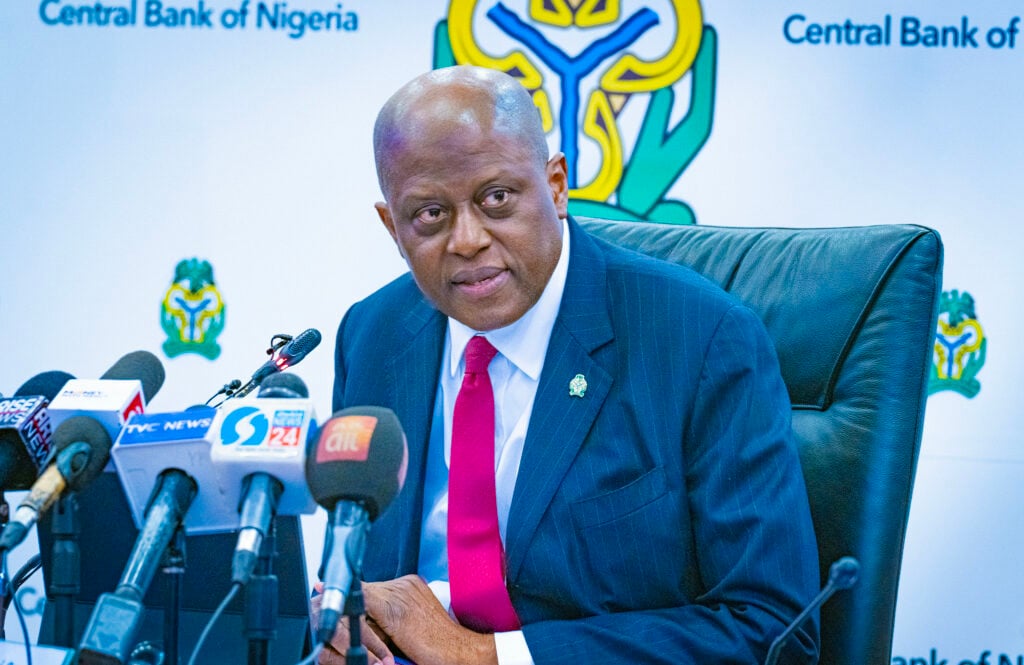
Back on June 15, 2026, the CBN issued a circular ordering all payment transaction data generated in Nigeria to be stored and managed locally by the start of 2027. The directive covers deposit money banks, microfinance banks, mobile money operators, switching companies and payment service providers. What wasn’t clear at the time was exactly how institutions would prove they’d complied, until now.
On August 4, 2026, Nigeria’s federal tech regulator NITDA signed three regulatory instruments establishing the National Sovereign Cloud Initiative: the National Cloud Computing Guideline, the National Cloud Technical Guideline, and the National Digital Infrastructure Assurance Framework, backed by a National Cloud Investment Strategy. From October 2026, a national digital regulatory platform goes live to handle onboarding, registration, technical assessment and certification of cloud providers, data centre operators and AI infrastructure operators.
“The same technical standard will apply to Nigerian companies and global hyperscalers,” NITDA Director General Kashifu Inuwa Abdullahi said at the signing. “Certainty attracts investment. Ambiguity deters it.”
The pressure isn’t evenly spread. According to Krishnan Ranganath, CEO of UniCloud Africa, most Tier-1 and Tier-2 commercial banks have already localised their transaction data. Fintechs, digital banks and smaller financial players hosting data overseas are the ones now racing the clock, many locked into long-term contracts with international cloud providers that make migration both expensive and technically complex.
With more than 90% of regulated Nigerian businesses still hosting data abroad, the Nigeria data localisation deadline is forcing a costly, compressed infrastructure overhaul across the sector in under six months.
It isn’t all pain, though. Temitope Osunrinde of Africa Hyperscalers calls the directive “one of the strongest demand signals yet for local data centres, cloud platforms and interconnection services.” Nigeria currently runs about 26 data centre facilities with 65 to 86 megawatts of installed capacity, a figure industry watchers expect to surge past 400 megawatts within three to five years as local players like Galaxy Backbone position themselves to absorb the incoming business.
Whether Nigeria’s infrastructure, capital and technical talent can scale fast enough before January 2027 is now the real question hanging over the country’s fast-growing digital finance sector.