Quick Reads:
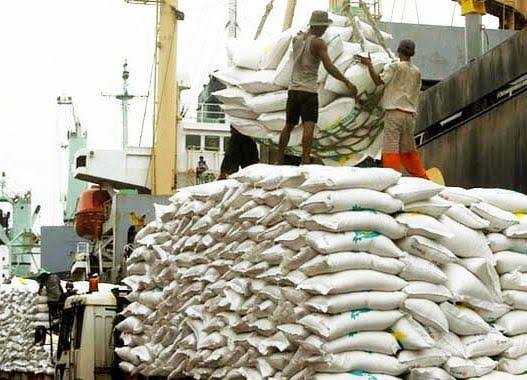
- Africa’s food import bill hit $122.9 billion in 2022, driven by disruptions from the Russia-Ukraine war.
- President Tinubu says scientific innovation, not natural resources, will determine Africa’s agricultural future.
- 845 million Africans, 58% of the population, are moderately or severely food insecure.
- Intra-African agricultural trade remains below 20%, compared to over 50% in Asia.
- Full AfCFTA implementation could boost intra-African agricultural trade by 29%.
President Bola Tinubu has raised the alarm over Africa’s swelling food import bill, calling on governments across the continent to pour sustained investment into science, research and innovation to fix what he described as a deepening food security crisis.
Speaking at the opening of the 9th Africa Agriculture Science Week and the 10th General Assembly of the Forum for Agricultural Research in Africa (FARA) in Abuja, Tinubu, represented by the Minister of Agriculture and Food Security, Senator Abubakar Kyari, said Africa’s agricultural success would depend less on its natural resources and more on the strength of its research institutions.
His comments came as a new report by AKADEMIYA2063 revealed that Africa’s food import bill hit a record $122.9 billion in 2022, a figure that lays bare how far the continent still is from turning its agricultural potential into food security and prosperity.
“Before countries became prosperous, they first learned how to feed their people; and before they transformed agriculture, they invested in science,” Tinubu said, stressing that Africa’s vast arable land and youthful population count for little unless converted into real innovation and enterprise.
The President said his administration had placed agriculture at the heart of its Renewed Hope Agenda, with reforms spanning irrigation expansion, mechanisation, improved seed and fertiliser access, digital agriculture and agro-industrial development already under way.
Delivering the keynote address, Managing Director of AKADEMIYA2063, Dr Debisi Araba, linked Africa’s ballooning food import bill directly to shocks from the Russia-Ukraine war, warning that the continent remains dangerously exposed despite holding nearly two-thirds of the world’s uncultivated arable land.
Araba noted that intra-African agricultural trade still accounts for less than 20 per cent of total trade, compared to over 50 per cent in Asia, largely due to restrictive regulations that function like a 49 per cent tariff on cross-border agricultural goods. He argued that full implementation of the African Continental Free Trade Area (AfCFTA) could lift intra-African trade by 29 per cent and ease reliance on imports.
The numbers behind the crisis are stark: 845 million Africans, 58 per cent of the population, are food insecure, while 62 per cent of preschool-aged children suffer from key nutrient deficiencies. Yet agriculture remains the continent’s biggest employer, accounting for 63 per cent of jobs, even as 72 million young Africans remain jobless or out of training.
Araba pointed to underinvestment as a core problem, noting that 41 of 46 African countries spend below the African Union’s benchmark of one per cent of agricultural GDP on research. He cited black soldier fly farming as one frontier industry capable of adding $211 billion to Africa’s GDP and creating 17 million jobs if properly scaled.
“A tractor imported is not mechanisation mastered,” Araba said, warning that without stronger institutions and knowledge systems, Africa’s agricultural transformation will remain out of reach.