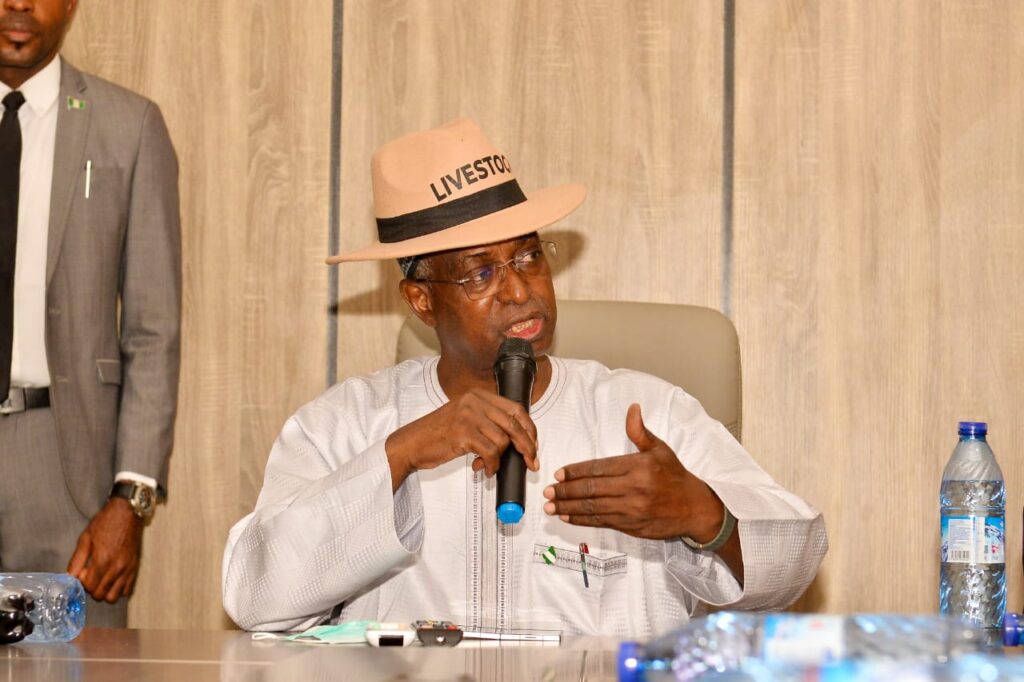
The Federal Ministry of Livestock Development has pushed back against a wave of reports claiming it set aside ₦140 million in the 2026 budget for the rehabilitation of Emir palaces and mosques in Kaduna State, calling the claims false and misleading.
The controversy began after TheCable reported that the ministry had earmarked ₦140 million for the construction and rehabilitation of emir palaces and mosques in Kaduna state, citing the 2026 Appropriation Act. The report noted the allocation was captured under the ministry’s headquarters’ capital projects, despite having no obvious link to livestock development. The claim was picked up by several other outlets, sparking public criticism over the ministry’s spending priorities.
But in a statement issued on Friday, July 17, and signed by Henrietta Okokon, Head of Information and Public Relations, the Ministry of Livestock Development rejected the reports outright. According to the statement, the ₦140 million Emir palace budget line does not belong to the ministry’s headquarters allocation at all. Instead, the funds are tied to the budget of the Federal College of Veterinary and Medical Laboratory Technology, Vom, Plateau State, a self-accounting institution that manages its own distinct budgetary provisions separate from the ministry’s core budget.
The ministry explained that beyond the Emir palace budget mix-up, several other unrelated projects contained in the Vom college’s budget had also been wrongly credited to the ministry, creating what it described as an erroneous impression that it was funding projects entirely outside its mandate and priorities.
The ministry urged the public, media houses, and other stakeholders to draw a clear line between its headquarters budget and the separate budgets of agencies and institutions under its supervision before drawing conclusions or publishing reports. It added that doing so would prevent similar misattributions in the future.
Still, the ministry acknowledged that the confusion pointed to a real problem. It admitted there were legitimate concerns about the alignment and clarity of budget proposals submitted by institutions operating under its watch. The ministry said it would strengthen coordination with its agencies to ensure that budget proposals are properly aligned with institutional mandates, clearly articulated, and communicated in ways that promote better public understanding, in line with its stated commitment to transparency and accountability in the management of public funds.
The ministry also called on journalists to verify budget-related figures with official government sources before publishing, describing this as a necessary step to ensure the public receives accurate information and to prevent the spread of misleading reports.