
Dangote Refinery Fortunes Soar as US-Iran War Reshapes Global Oil Trade
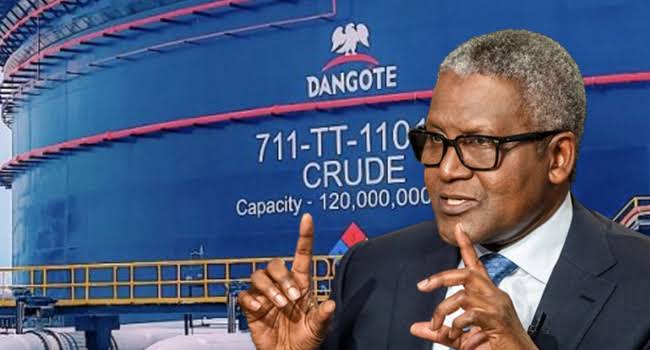
The ongoing conflict between the United States and Iran is turning out to be an unlikely windfall for Africa’s richest man, as the Dangote Refinery fortunes continue to climb amid global energy market disruptions.
According to a new report by the Wall Street Journal, Aliko Dangote’s $20 billion refinery is one of the biggest winners of the fallout from the US-Iran war, with buyers worldwide scrambling for diesel, jet fuel and gasoline that don’t have to pass through the volatile Strait of Hormuz. The timing could not have been better, as the refinery hit full capacity in February, just as tensions in the Middle East began rattling global supply chains.
The surge has been dramatic. Bloomberg’s Billionaires Index shows Dangote’s personal wealth has risen by $4.86 billion since the start of 2026, pushing his net worth to roughly $34.8 billion and cementing his place as the world’s 65th richest person. It’s the latest chapter in a growing pattern of the Dangote Refinery fortunes benefiting from bets Dangote has made across cement, sugar, salt and now oil refining, industries tied closely to Africa’s expanding middle class.
Refinery output has jumped more than 70 per cent this year, according to the report, driven by soaring demand for refined products. Dangote Industries Group Vice-President, Devakumar Edwin, told the Wall Street Journal that the company now plans to list the refinery on the Nigerian Exchange later this year, targeting a valuation of at least $50 billion, alongside a secondary listing likely in New York.
Nigeria as a whole appears to be benefiting from the shift. The report notes that with Middle East supply routes under pressure, global buyers have turned to producers outside the region, including Nigeria, boosting demand for both crude and refined products. That shift has helped support the naira and kept a lid on domestic petrol prices.
Edwin also revealed that demand across sub-Saharan Africa has grown, alongside a sharp rise in jet fuel exports to Europe. To keep up, Dangote Industries is targeting an expansion of refining capacity to 1.4 million barrels per day by 2028, a project expected to cost about $13 billion. The company is also eyeing a second refinery, this time in Lamu, Kenya, alongside a new port facility, at an estimated cost of $15 billion over three years.
It’s not all smooth sailing, though. The report flags a persistent challenge: securing enough local crude. The Nigerian National Petroleum Company Limited has reportedly struggled to meet the refinery’s needs, constrained by existing export commitments and oil-backed loan obligations.
Beyond crude sourcing, Dangote is also expanding distribution, with plans to acquire vessels, set up a hub in Namibia, and build a pipeline to reach landlocked markets including Zimbabwe, Botswana and Zambia.
For now, though, the geopolitical storm rattling global oil markets has handed Dangote a rare advantage, one that’s reshaping not just his personal fortune but Nigeria’s standing in the global energy trade.