Quick Reads
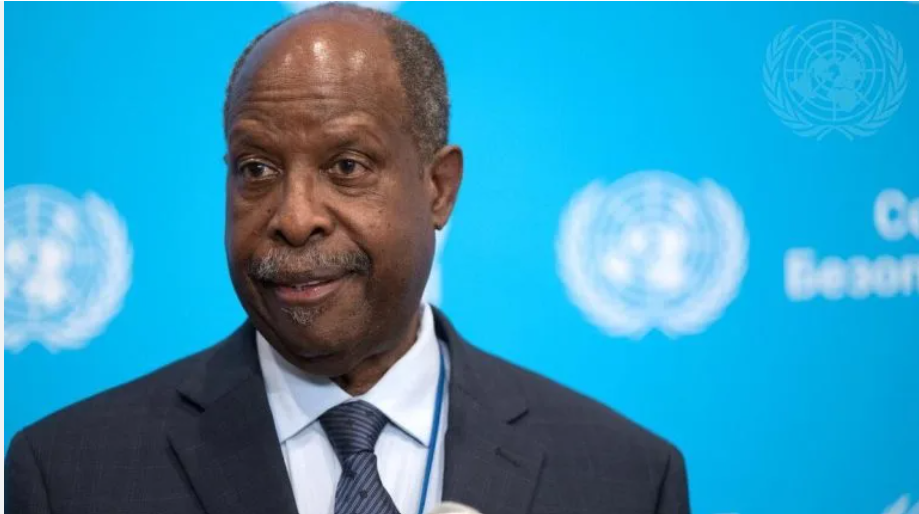
- The warning came from Leonardo Simão, the UN’s special representative for West Africa and the Sahel, in a briefing to the UN Security Council.
- Simão’s report covered developments between November 29, 2025, and June 30, 2026.
- Armed groups are reportedly combining drones and crypto with cross-border coordination, deepening ties to transnational organised crime.
- Northern Nigeria and the central Sahel remain the worst-hit areas, the UN says.
- About 6.8 million people have been displaced across the region, with a further 1.28 million pushed into refugee or asylum-seeker status.
- Women, children, and young people are said to be bearing the heaviest toll.
- Some diplomatic progress was noted: the reopening of the Kamba border crossing between Nigeria and Niger, and advances by the Cameroon-Nigeria Mixed Commission on the 2002 ICJ boundary ruling.
- ECOWAS is working to activate its long-delayed regional standby force but remains hampered by funding gaps.
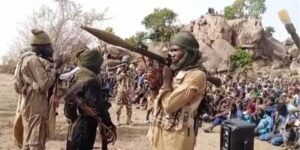
The United Nations has warned that terrorist groups active in northern Nigeria and across West Africa and the Sahel are becoming more technologically sophisticated, increasingly turning to drones, advanced communications tools, and cryptocurrency to strengthen their operations.
The warning was delivered by Leonardo Simão, special representative of the UN secretary-general for West Africa and the Sahel and head of the United Nations Office for West Africa and the Sahel (UNOWAS), during a briefing to the Security Council. He presented the secretary-general’s latest assessment of the region, covering the period from late November 2025 through the end of June 2026.
According to Simão, these armed groups are not operating in isolation, their activities are increasingly intertwined with organised transnational crime networks, with the dual aim of tightening territorial and economic control while chipping away at public trust in government institutions. He described the situation as especially severe in the central Sahel and northern Nigeria, where the erosion of state authority is doing lasting damage to social cohesion.
The human cost remains steep. Simão told the council that Nigeria, Niger, and Burkina Faso continue to see repeated attacks, kidnappings, and heavy civilian casualties. Displacement figures across the region have climbed to roughly 6.8 million people, with an additional 1.28 million now living as refugees or asylum seekers. Women, children, and young people, he said, continue to carry the greatest burden of the crisis, compounded by funding shortfalls that have restricted humanitarian access.
Despite the grim picture, Simão pointed to pockets of progress on regional cooperation, including the reopening of the Kamba border crossing between Nigeria and Niger, and continued work by the Cameroon-Nigeria Mixed Commission to implement the 2002 International Court of Justice ruling on the two countries’ land and maritime boundary.
He also stressed that military force alone will not defeat terrorism in the region, urging governments to tackle the underlying socio-economic drivers of extremism, particularly poverty. On the regional security front, Simão noted that ECOWAS is renewing efforts to get its standby force operational, though funding constraints continue to slow progress.
The briefing followed the Security Council’s decision to extend UNOWAS’s mandate through January 31, 2029.